Join me as I try to be a Ninja, talk about martial arts, food, rave & rant and just think of all the about cool stuff of life

Showing posts with label CNN News. Show all posts

Thursday, April 30, 2009

A to Z of malaria

A to Z of malaria

LONDON, England -- Malaria is one of the world's worst health problems and one of its biggest killers, with half a billion people affected every year, according to the Roll Back Malaria partnership.
The WHO wrote that there were 247 million cases of malaria in 2006, and 880,000 deaths.

Around half a billion people are infected with malaria every year. Ninety percent of those cases are in Africa.
Click to view previous image
1 of 2
Click to view next image

Saturday marks World Malaria Day, when the world commemorates global efforts to eradicate the disease.

Below CNN's Vital Signs has produced a complete A - Z guide to how malaria spreads, the symptoms to look out for and how to protect yourself.

A is for Anti-malarial drugs
The history of anti-malarial medicine has been marked by a constant struggle between evolving drug-resistant parasites and the search for new drugs. Currently, anti-malaria experts are focusing on therapies that combine several drugs for better effects.

B is for Blood stream
Once a mosquito has bitten and the malaria parasites reach the liver, the parasites divide and create thousands of mature parasites. These are released into the blood and infect red blood cells. At that point, typical malaria symptoms such as fever and anemia develop.

C is for Chloroquine
Until recently, Chloroquine, an anti-malarial drug, was the first option for many people because of its relatively low price and effectiveness. However, resistance to Chloroquine in many parts of the world has rendered the drug ineffective.

D is for Diagnosis
After noting your symptoms and travel history, your doctor will likely obtain a sample of your blood for observation. Two blood samples, taken at six- and 12-hour intervals, can usually confirm the presence of the malaria parasite and its type. It is possible to be infected by more than one parasite at the same time.

E is for Epidemic
According to the World Health Organization (WHO), large and devastating epidemics can occur when the mosquito-borne parasite is introduced into areas where people have had little prior contact with the infecting parasite. These epidemics can be triggered by wet weather conditions and further aggravated by floods or mass population movements driven by conflict.
Vital Signs
Each month CNN's Dr. Sanjay Gupta brings viewers health stories from around the world.
See more from the show »

F is for Fever
The most common symptom of all types of malarias is high fever, which is why doctors often misdiagnose malaria for flu. The fever is a reaction to toxins in the blood. It is therefore advised to tell your doctor you have been to a malaria affected zone, even if symptoms arise months after the trip.

G is for Genome
In 2002, -- hundred years after it was discovered that mosquitoes transmit the malaria parasite -- the complete genetic codes of both the human malaria parasite and the mosquito that spreads it was cracked. This development brought scientists a step closer to developing drugs and vaccines to fight the disease, Nature magazine reported.

H is for Hotspots
Most cases and deaths are in sub-Saharan Africa, many of them occurring among children. However, Asia, Latin America, the Middle East and parts of Europe are also affected. In 2006, malaria was present in 109 countries and territories.
Don't Miss

* Map offers hope in fight against malaria
* 'Star Wars' scientists create laser gun to kill mosquitoes
* Chili peppers add spice to life

I is for Immunity
Travelers from malaria-free regions such as Europe and the United States, with little or no immunity, who go to areas with high disease rates, are particularly vulnerable. It is essential to take precautions by taking anti-malarial drugs prescribed by your doctor.

J is for Julius Wagner-Jauregg
Julius Wagner-Jauregg, a Viennese doctor, was the first to intentionally infect syphilis patients with malaria parasites. By controlling the subsequent malaria-related fever with an anti-malaria drug, the effects of both syphilis and malaria could be minimized. Jauregg received the Nobel Prize in Medicine in 1927.

K is for Killer
Malaria is a life-threatening disease but it is preventable and curable if the right steps are taken. Education in recognizing the symptoms has reduced the number of cases in some areas by 20 percent. Recognizing the disease in the early stages can stop the disease from becoming a killer.

L is for Laser gun
U.S. scientists say they are developing a laser gun that could kill millions of mosquitoes in minutes. The laser fires at mosquitoes once it detects the audio frequency created by the beating of wings, the lead scientist on the project told CNN. The project is being funded by the Bill & Melinda Gates Foundation.

M is for Mosquitoes
Malaria is caused by the bite of the female Anopheles mosquitoes. The mosquitoes bite between sunset and sunrise and parasites from the mosquito are then injected into the person's skin and transported to the liver. About 170 species of such parasites exist, but only four cause malaria in humans.

N is for Nets
The distribution of mosquito nets with insecticide is a very effective method of malaria prevention, and it is also one of the most cost-effective methods. These nets can often be obtained for around $3. Earlier this month, actor Ashton Kutcher won a Twitter race against CNN to reach 1 million followers. Kutcher had pledged 10,000 mosquito nets to charity if he beat CNN, and 1,000 if he lost. CNN agreed to do the same.

O is for Obstacles
In many endemic areas, access to health facilities, as well as drug costs, still present major obstacles. Humanitarian agency Medecins Sans Frontieres estimates that the cost of treating a malaria-infected person in an endemic country was between $0.25 and $2.40 per dose in 2002.

P is for Pandemic
For malaria to become a pandemic (plague) in an area, several factors have to be present: high human population density; high mosquito population density; high rates of transmission from humans to mosquitoes and from mosquitoes to humans.

Q is for Quinine
Quinine was the first effective treatment for malaria in the 17th century. Since the 1940's, many other anti-malarial drugs have appeared on the market and have taken precedent over quinine. But quinine is still being used to treat malaria in some cases.

R is for Repellent
The Centers for Disease Control and Prevention says inspect repellents with DEET (most common active ingredient in strong insecticides) in them should be used on exposed skin and flying-insect spray can be used to kill mosquitoes in the sleeping area. DEET may be toxic, however and should be used with care.

S is for Symptoms
Fever is not the only symptom of malaria. Other symptoms can include shivers, headaches and nausea. Sweating and exhaustion is also common and in some cases, it can affect the brain or kidneys.

T is for Tablets
Malarone is a common anti-malaria drug among many travelers. It is said to have a 97 percent efficacy with relatively few side-effects. It can be given just one day before arrival in a malaria endemic country and only needs to be taken for another week after leaving.

U is for Unborn child
According to the WHO, pregnant women are at high risk of contracting malaria. The illness can result in high rates of miscarriages and cause more than 10 percent of maternal deaths annually. This figure can rise to 50 percent in cases of severe disease.

V is for Vaccine
Despite intensive research, no effective malaria vaccine has been developed to date. But according to a report in April's New Scientist journal, a unique vaccine taken from the saliva of infected mosquitoes has received approval from the U.S. Food and Drug Administration to be tested in people.

W is for World Malaria Day
April 25 has become World Malaria Day to provide a global effort to control malaria around the world. The international malaria community only has two years left to meet the 2010 targets of delivering effective protection and treatment to all people at risk of malaria, as called for by the UN Secretary-General, Ban Ki-Moon.

X is for X-ray
X-ray microscopes are used to find the presence of malaria in red blood cells and see how they interact with healthy cells. One of the advantages of this type of microscope is that it produces very-high-resolution images of the cell structure.

Y is for Yellow fever
Yellow fever is another disease transmitted by mosquitoes. Some countries, such as Peru, require a certificate showing yellow-fever vaccination before you can travel there.

Z is for Zanzibar
Zanzibar, part of the African republic of Tanzania, has had relative successes in combating malaria; Africa's biggest killer according to the New Scientist journal. The achievements are due to the widespread use of treated bed nets, along with the switch to new anti-malarial drugs instead of Chloroquine in 2004.


7 more days for Karma Kula's 3rd chapter!

Sunday, April 26, 2009

Kiss a Cleft Lip

Adnan's story is a touching one. I wish that a lot more children could get this type of opportunity to smile too.


Kissing a cleft lip goodbye- Adnan’s Journey, Part I
By Nicole Lapin

CNN.com Live anchor


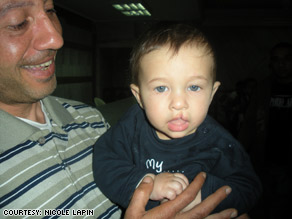
In the middle of a crowded hospital hallway in Alexandria, Egypt, Adnan’s blue eyes pop. He is sitting on the lap of his father, Mohammed Saleh. Saleh looks at me and then at his pregnant wife next to him. “I hope the new one doesn’t have this condition,” he says in his broken English.


“This condition” refers to his son’s cleft lip. The Salehs are one of the more than 200 families who showed up at Shark Al Madina Hospital to try to receive free treatment for their child’s cleft lip and/or palate. It is Operation Smile’s first mission in this city and the turnout is higher than expected.


“I don’t know why he has it,” Saleh mutters as he kisses his 7-month-old son’s forehead. I wish I had an answer for him. I try telling him in my broken Arabic that the organization says it’s a combination of genetic, environmental and nutritional factors. It means little to a father just trying to fix whatever caused his son’s deformity.


The global rate of cleft lip and/or palate is about 1 in every 750 births. Unlike in the United States, the corrective surgery is costly and hard to come by in countries like Egypt. I am here with an Operation Smile volunteer group- a mix of accomplished plastic surgeons, nurses and pediatricians from all over the world- aiming to change that for kids like Adnan.


Running on adrenaline and Turkish coffee, the volunteers transformed one corner of the hospital into an eight-step screening process on the first day of the mission. Benches turned into registration centers. Markers and recycled paper became locator signs: “Vitals,” “Dental,” “Anesthesiologist.” A bed sheet, beach ball and coloring book looked like an indoor playground in no time.


Women dressed in full hijab wait hours for their children to have a chance at getting the surgery. An older woman walks up to me so fast she nearly stumbles over her long skirt. “My grandson, my grandson, look, look,” she yells, holding the advertisement that appeared in a local paper in one hand and a wallet full of his pictures in the other.


The team will do approximately 175 surgeries during this mission. Not everyone from two days of screening receives an operation. The organization prioritizes the kids getting screened based on their chances for a successful recovery.


The Salehs are Number 27 in this process. I start following them when they got their number at 7 a.m. They finish around noon and before they leave I ask Adnan’s father what he wants his son to be when he grows up. Saleh answers quickly, “Whatever will make him happy.” I say, “So, a doctor, lawyer, policeman…?” He nods, “I just want my son to have the chance.”


A child whose cleft lip goes untreated will carry a social stigma in much of the world. Some cultures believe it is “a curse” or “God’s will.” A child whose cleft palate, an actual split on the roof of his or her mouth, goes untreated can have difficulty eating and speaking. In some pockets of the globe where malnutrition is prevalent, some of those youngsters won’t survive.


I hear the last prayer call of the day echo outside the seaside hospital – that means it is 8 in the evening. I just found out that Adnan has been accepted to surgery. It’s scheduled for Saturday morning. I can’t wait to see what he looks like when he smiles with more than just his eyes.


Editor’s Note: Medical news is a popular but sensitive subject rooted in science. We receive many comments on this blog each day; not all are posted. Our hope is that much will be learned from the sharing of useful information and personal experiences based on the medical and health topics of the blog. We encourage you to focus your comments on those medical and health topics and we appreciate your input. Thank you for your participation.


Don't forget, Karma Kula's 3rd chapter will be out soon!

Sunday, February 15, 2009

Boy fathers, mystic warriors, etc

Oh and happy valentines! It's never been a special day for me or anything but.. what the heck.

My god what is the world coming to? I'm referring to the 13 year old "father". This is what happens when nobody wants to discipline anybody and they're wondering why there's all these teenage problems and what not. It's depressing!

Then here's Karma Kula Mystic Warrior. they've got some new trailers up it seems.

Don't forget to watch the little ninja

Monday, December 29, 2008

Get going

I've been pretty happy these past few days. :)

Army to honor soldiers enslaved by Nazis

BOSTON, Massachusetts (CNN) -- The U.S. Army says it will honor the "heroism and sacrifice" of 350 U.S. soldiers who were held as slaves by Nazi Germany during World War II.
Bernard "Jack" Vogel died in a Nazi slave camp in the arms of fellow U.S. soldier, Anthony Acevedo, in 1945.

Bernard "Jack" Vogel died in a Nazi slave camp in the arms of fellow U.S. soldier, Anthony Acevedo, in 1945.
Click to view previous image
1 of 3
Click to view next image

The decision by the Army effectively reverses decades of silence about what the soldiers endured in the final months of the war in 1945 at Berga an der Elster, a subcamp of Buchenwald where soldiers were beaten, starved, killed and forced to work in tunnels to hide German equipment.

More than 100 U.S. soldiers died in the camp or on a forced death march. Before they were sent back to the United States, survivors signed a secrecy document with the U.S. government to never speak about their captivity.

"The interests of American prisoners of war in the event of future wars, moreover, demand that the secrets of this war be vigorously safeguarded," the document says.

CNN last month reported the story of Anthony Acevedo, who was a 20-year-old medic when he was sent to Berga with the other soldiers. Acevedo kept a diary that details the day-to-day events inside the camp and lists names and prisoner numbers of men as they died or were executed. See inside Acevedo's diary »

That story prompted a chain of events, including hundreds of CNN.com users urging their congressional leaders to honor the soldiers of Berga. Two congressmen, Reps. Joe Baca, D-California, and Spencer Bachus, R-Alabama, wrote U.S. Army Secretary Peter Geren and asked him to recognize the 350 soldiers.
Don't Miss

* Lawmakers seek honors for soldiers held by Nazis
* After 63 years, man learns of brother's death
* Vet breaks silence on Nazi slave camp

The Army recently responded to the two congressmen, saying it is working "to determine an appropriate way to honor the heroism and sacrifice of these soldiers. We expect this review to be complete by March 6, 2009."

After learning of the Army's decision, Baca said in a press release, "The courage and perseverance they demonstrated in enduring such inhumane conditions is awe inspiring, and I am pleased the Army has opened a more extensive investigation into honoring these men."

For the dozen of Berga survivors who are still living, the news came as a shock. Many had long ago given up hope that their country would ever recognize them for what they endured.

"It's amazing," said Morty Brooks, now 83, when informed of the Army plans. "It's a recognition that's many years past due. No particular notice was ever given to us by the government, and it should be part of the military's annals."

Acevedo, now 84, noted the ages of the remaining survivors -- all of whom are in their 80s. Some are in failing health. He said he hopes the Army can reach its decision before March, because of the possibility some could die before then.

"If they can do it a lot sooner, we would appreciate it much," he said. "I thank God I'm still able to communicate and express myself with dignity, and I'm hoping the other fellas are able to communicate also.

"I've always been proud to be a U.S. soldier. It did me some good, with God's help and faith. I'll pray for everybody, all my other fellas."

He said the 350 soldiers are heroes who "exposed our lives for our country, for democracy and freedom of speech." The soldiers, all of them survivors of the Battle of the Bulge, had originally been sent to a POW camp known as Stalag IX-B in Bad Orb, Germany. From there, the Nazis separated the 350 soldiers based on being Jewish or "looking like Jews" and sent them to the slave camp around February 8, 1945.Video Watch Acevedo describe treatment in the camp »

In Boston, Martin Vogel sits quietly in his home. His brother, Bernard "Jack" Vogel, died in Acevedo's arms at the age of 19 in April 1945. Bernard Vogel had tried to escape from Berga with another soldier named Izzy Cohen. Both were captured and forced to stand in their underwear outside the barracks for at least two days until they collapsed.

The last words Bernard Vogel ever uttered were "I want to die, I want to die." Listen as Acevedo tells brother of victim: "I held him in my arms" »

Martin Vogel, 82, said that "since learning of my brother's death in 1945, a week has not passed that I don't think of his untimely death. Many questions had gone unanswered during this time."

After talking with CNN.com and the few remaining survivors, he said, "My thoughts have come into a clearer focus. I have learned of the last few days of [Bernard's] life and what horrendous event took place prior to death. This has at least crystallized the uncertainty of his death and brought a close to this chapter."

Vogel still gets emotional talking about his brother's death. He wrote his thoughts so he wouldn't cry talking about it.

He continued, writing that questions remain on many issues, including the fate of his brother's captors and "the unwillingness of the Army to publicly document the capture and imprisonment of these soldiers. ... The least is I now know Jack died with friends near him, giving him comfort in his last moments."

The two Berga commanders -- Erwin Metz and his superior, Hauptmann Ludwig Merz -- were tried for war crimes and initially sentenced to die by hanging. But the U.S. government commuted their death sentences in 1948, and both men were eventually set free in the 1950s.

Charles Vogel, the uncle of Bernard and Martin, was outraged at the decision. At the time a powerful Manhattan attorney, he petitioned President Harry Truman, Secretary of State George Marshall and Defense Secretary James Forrestal to overturn the commutation.

Charles Vogel also helped form a group called "Berga Survivors" after the war in which some of the slave camp soldiers would meet to discuss the best way to pressure the government to honor them and allow them to testify against Metz and Merz.

In a bulletin from one of their meetings in early 1949, the "Berga Survivors" appeared optimistic the government would act. "Your cooperation now is doubly important, for things are beginning to break our way," the bulletin says. "A little enthusiasm, a little more cooperation, a little more action will accomplish a great, great deal now."

It adds, "You can aid in the campaign to get Washington to procure full justice for us."

More than six decades later, it appears the work of the original "Berga Survivors" group was not in vain. Most have since died, but the few who remain alive say they will never let their fellow soldiers be forgotten.
advertisement

"It's finally gotten to a point where the Army is coming to their senses after they had ignored us in the past," Acevedo said. "Why the silence all these years? It's time to recognize all these soldiers who sacrificed their lives."

CNN.com has located 14 Berga soldiers who are alive and will keep working to find if any others are still living.


Don't forget to watch your daily Ninjai Chapter